Why your marble is turning brown — and how to stop it
The culprit isn't the marble — it's the iron in the sand reacting with moisture. Here's exactly how to prevent it — and what your options are if it's already happened.
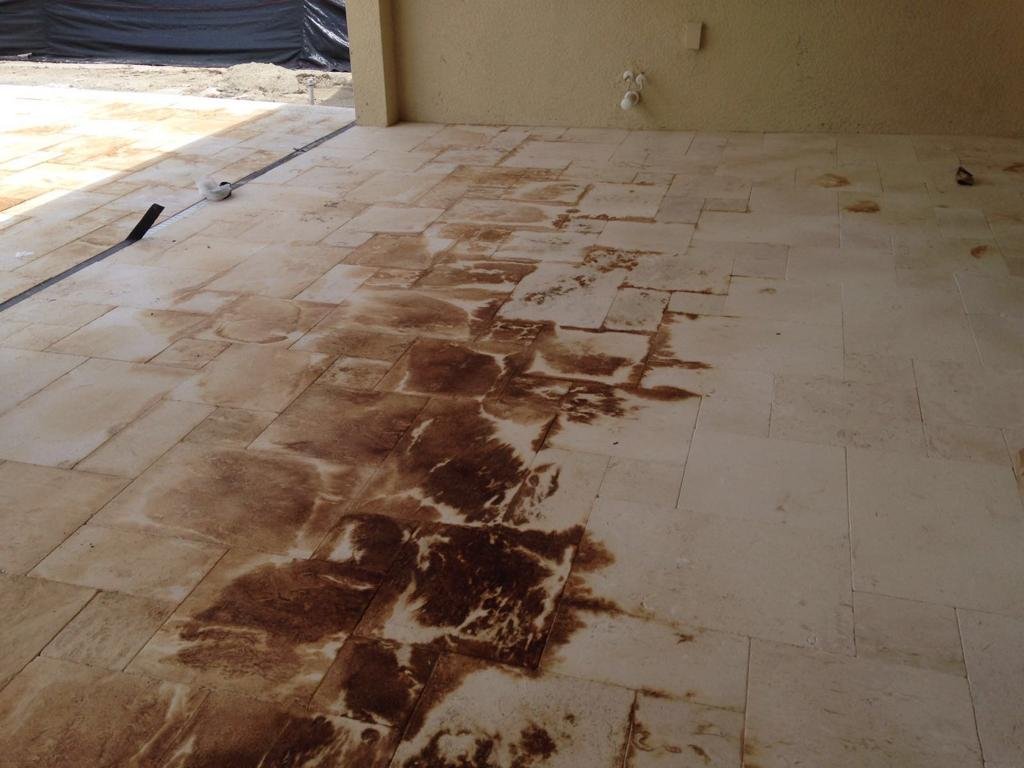
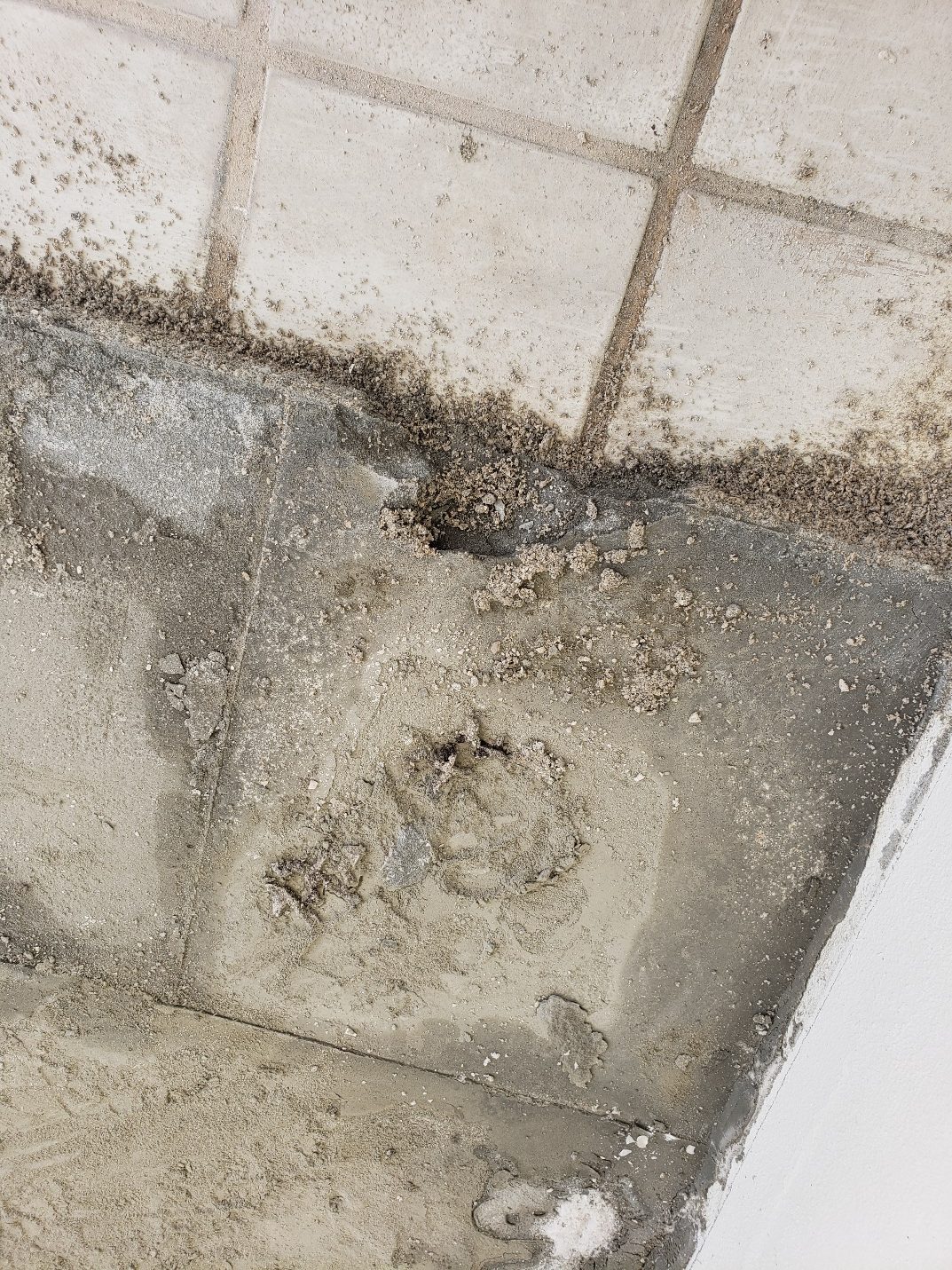
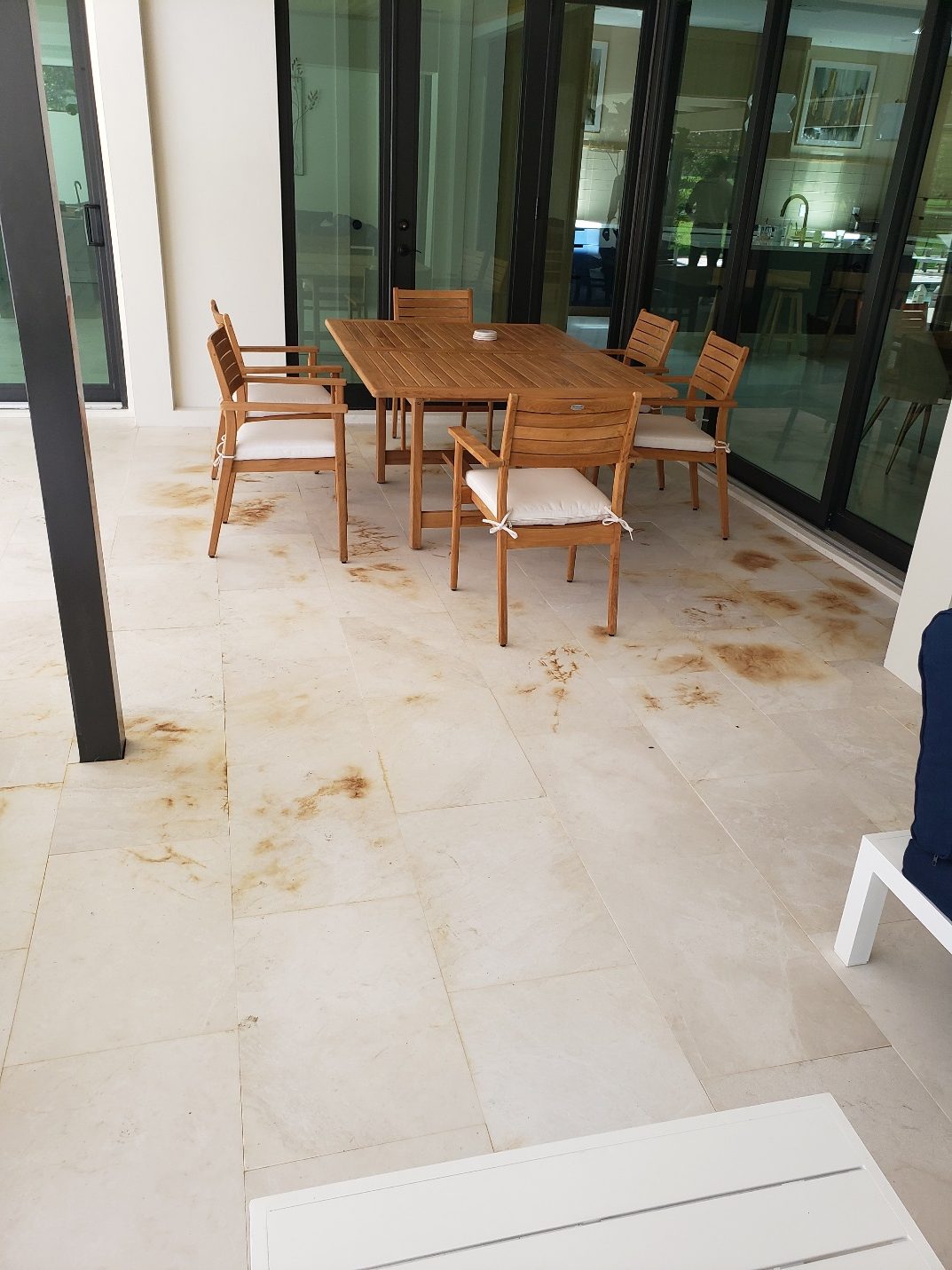
Myra limestone — iron migration from sand base below
Root Cause Analysis
Why sand-set installations stain marble
01
Iron content in bedding sand
Most construction-grade sands contain naturally occurring iron minerals. When wet, these minerals oxidize — producing rust that wicks upward into porous marble.
02
Marble's open pore structure
Unlike granite or porcelain, marble is highly porous and alkaline. It actively draws moisture and dissolved minerals upward through capillary action.
03
No barrier between stone and sand
Without a proper isolation membrane, there is direct contact between iron-bearing sand and the marble's unprotected underside — a recipe for staining.
Field Evidence
The iron is in the sand — not the stone
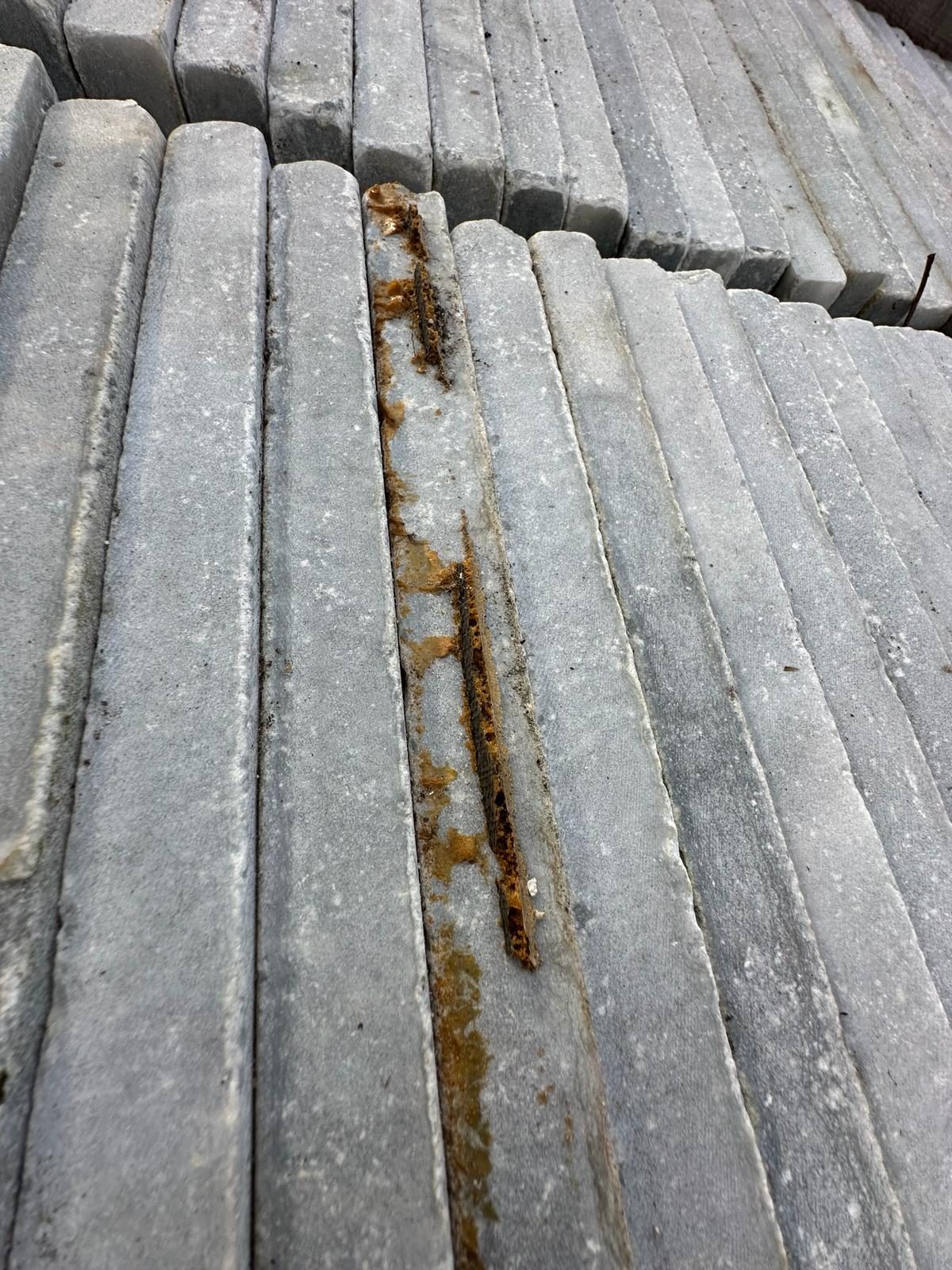
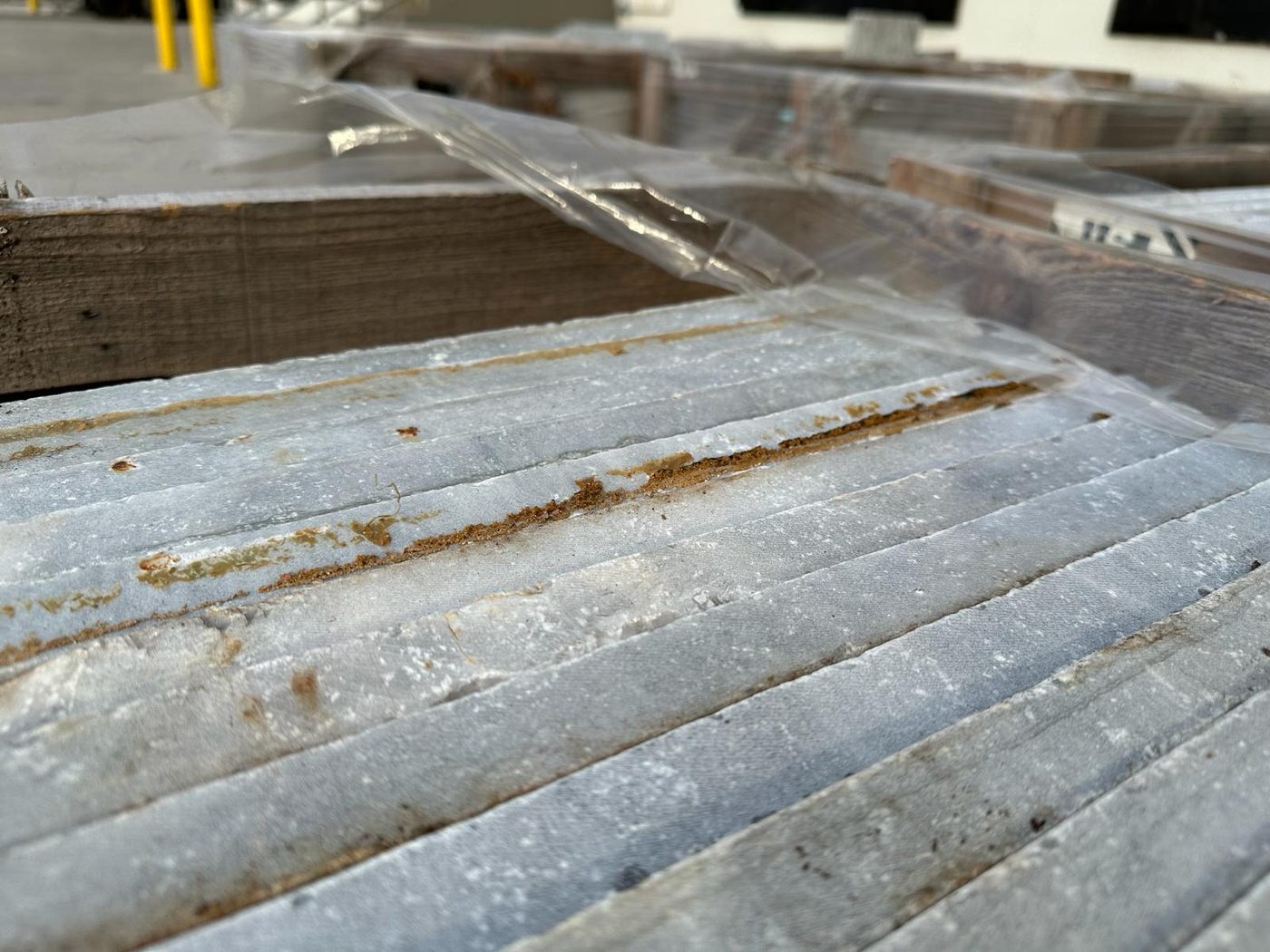
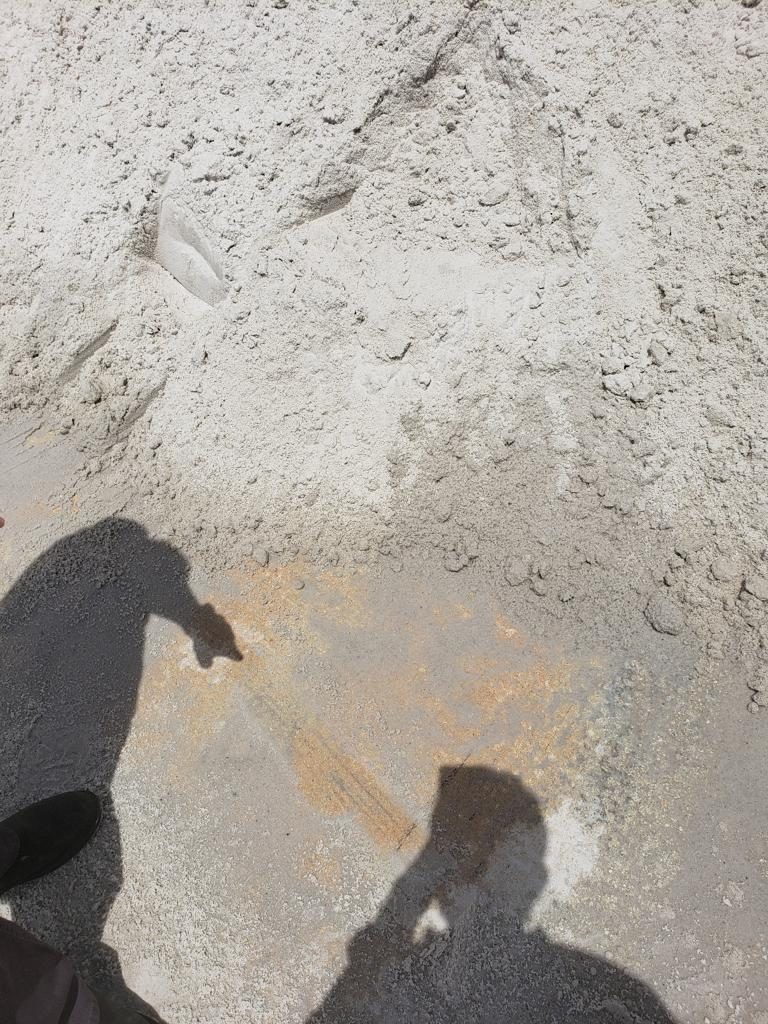
These are unedited field photos. The rust streaks visible in the sand piles below were photographed before the sand ever touched stone. Iron occurs naturally in most construction-grade sand, and it oxidizes the moment moisture reaches it.
Bedding sand — visible rust staining before installation
Rust streaks running through stockpiled sand
Sand pit, South Florida — iron content visible in raw deposit
What's underneath
The sand stays damp — for years
Lifting a paver months or years after installation almost always reveals damp sand beneath. As long as the sand stays wet, dissolved iron is continuously available to migrate upward into the stone above.
Water Retention
Sand holds moisture against the stone
Pool decks, irrigation, and rain all funnel water into the sand bed. Without a cement barrier, that water becomes the transport mechanism — carrying iron from the sand directly into the underside of the marble.
Mudset Reference
Tahoe Marble on mortar — clean after years in service
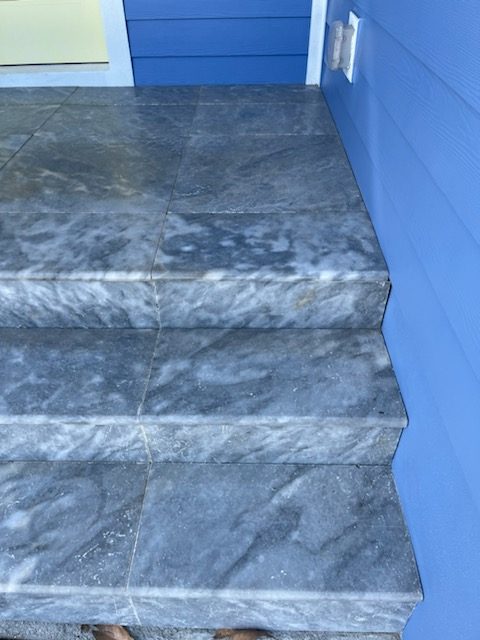
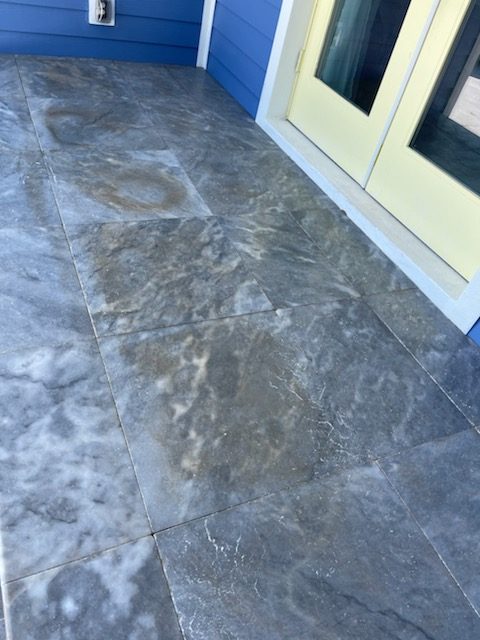
These are field photos of the same Tahoe Marble installed in a mortar bed. The stone has been in place exposed to weather, irrigation, and foot traffic — and shows no iron staining. When the same stone type is set on sand, iron staining is one of the most common complaints we receive. The variable is the base, not the stone.
Mortar Bed
Tahoe Marble · Steps
No sand contact, no moisture reservoir, no path for iron migration. The natural grey-blue color is the stone — not staining.
Mortar Bed
Tahoe Marble · Patio
The browns and swirls visible here are the marble's natural veining — not iron staining. There is no rust deposition pattern.
Why this matters
If marble were inherently a staining stone, every install would discolor — including this one. It does not. Mortar isolates the stone from any iron-bearing sand below, and the result is what you see here: clean stone, year after year. The stone is not the problem.
Documented Staining
It's not one stone — it's the install method
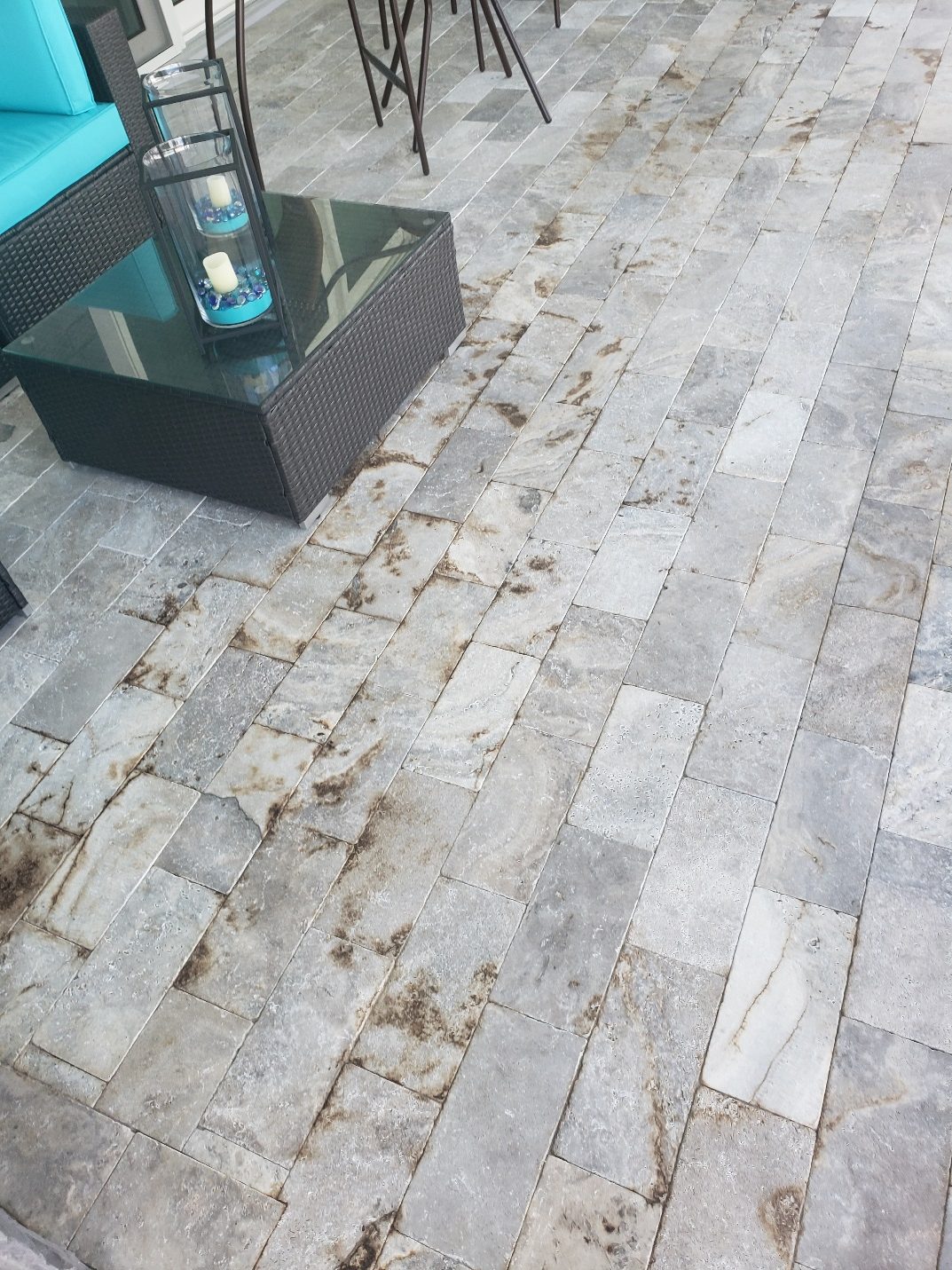
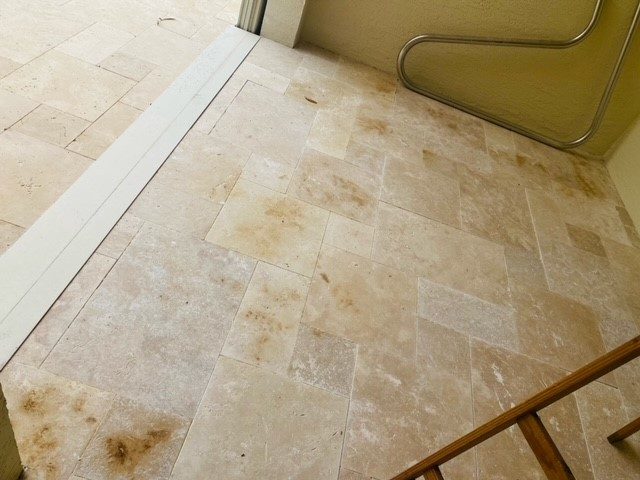
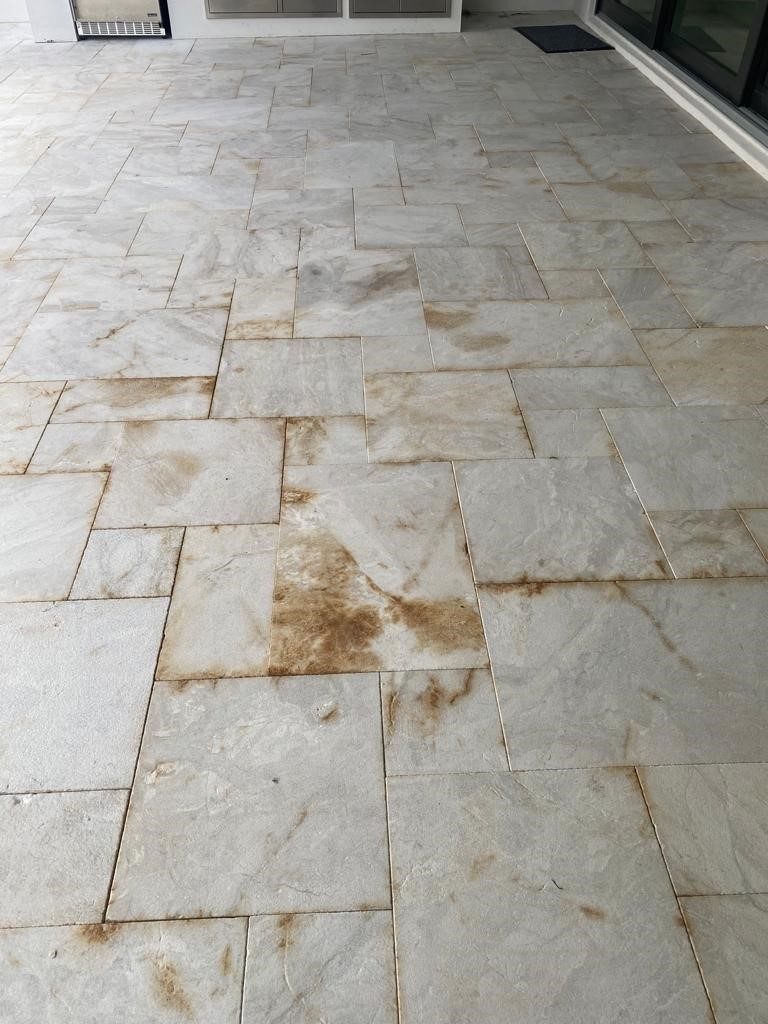
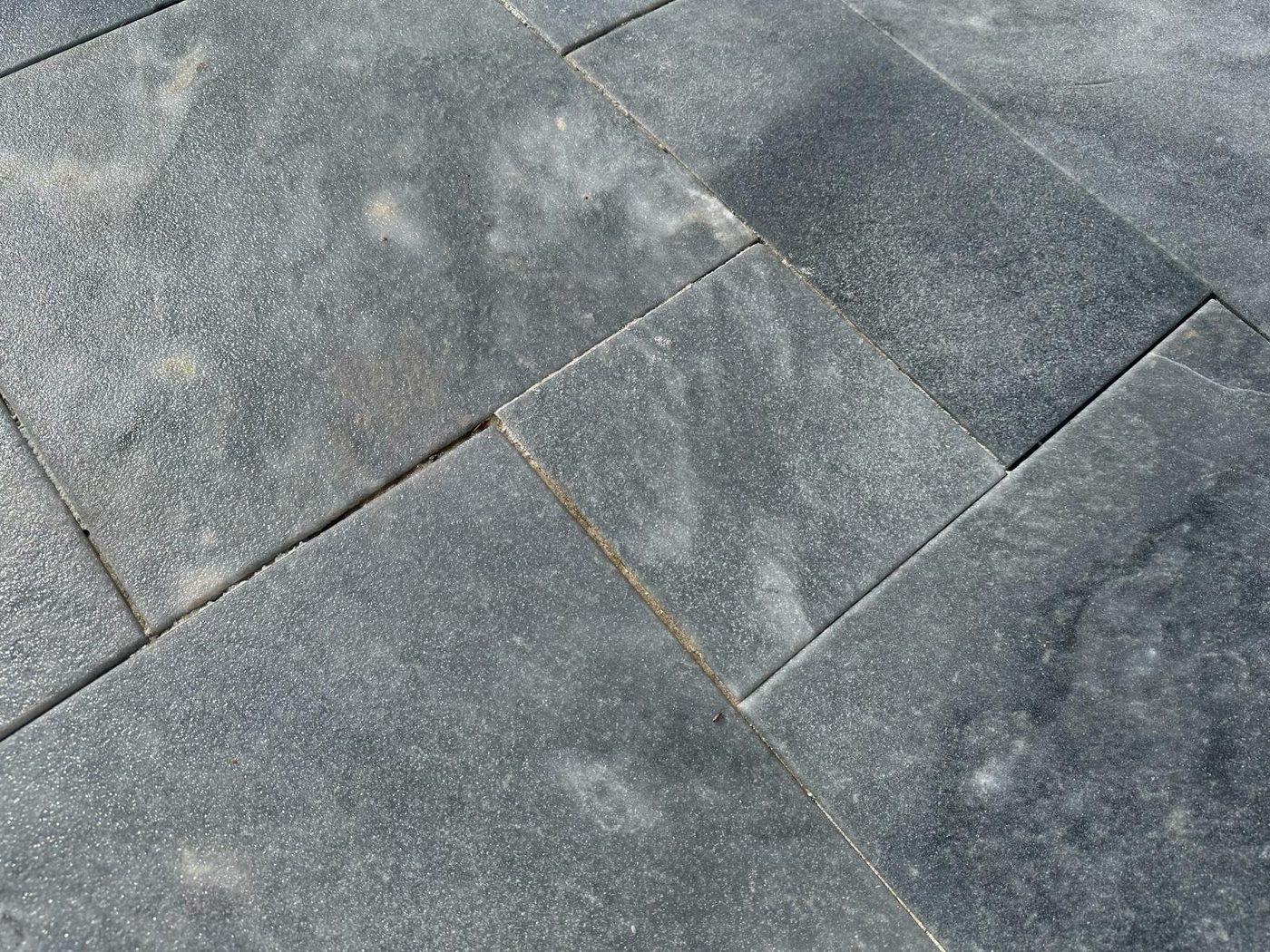
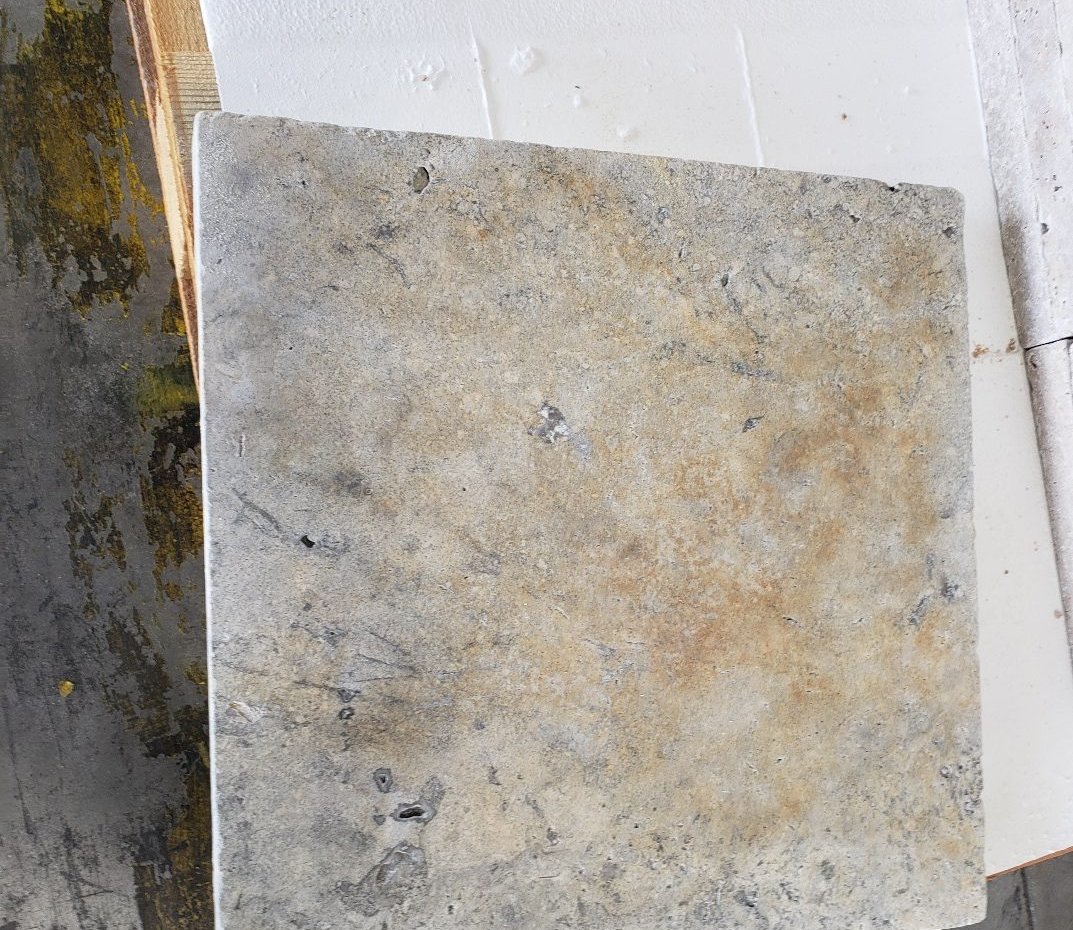
The same iron staining pattern shows up across marble, travertine, limestone, and even brick — anywhere stone sits on iron-bearing sand. The variable is not the stone type. It is the sand contact.
Silver Travertine
Ivory Travertine
Myra Limestone
Diana Royale Marble
Joint Staining
Stain often appears first along joints. The joints are the shortest path from the sand below to the surface, where evaporation concentrates iron.
Covered Areas Are Worse
Under covered patios and lanais, sand stays damp longer because sun and wind can't dry it out. More moisture, more iron transport, more staining.
Bleach Test
Bleach pulls the iron out — but only off the sand
Before
Stained paver — heavy iron oxidation
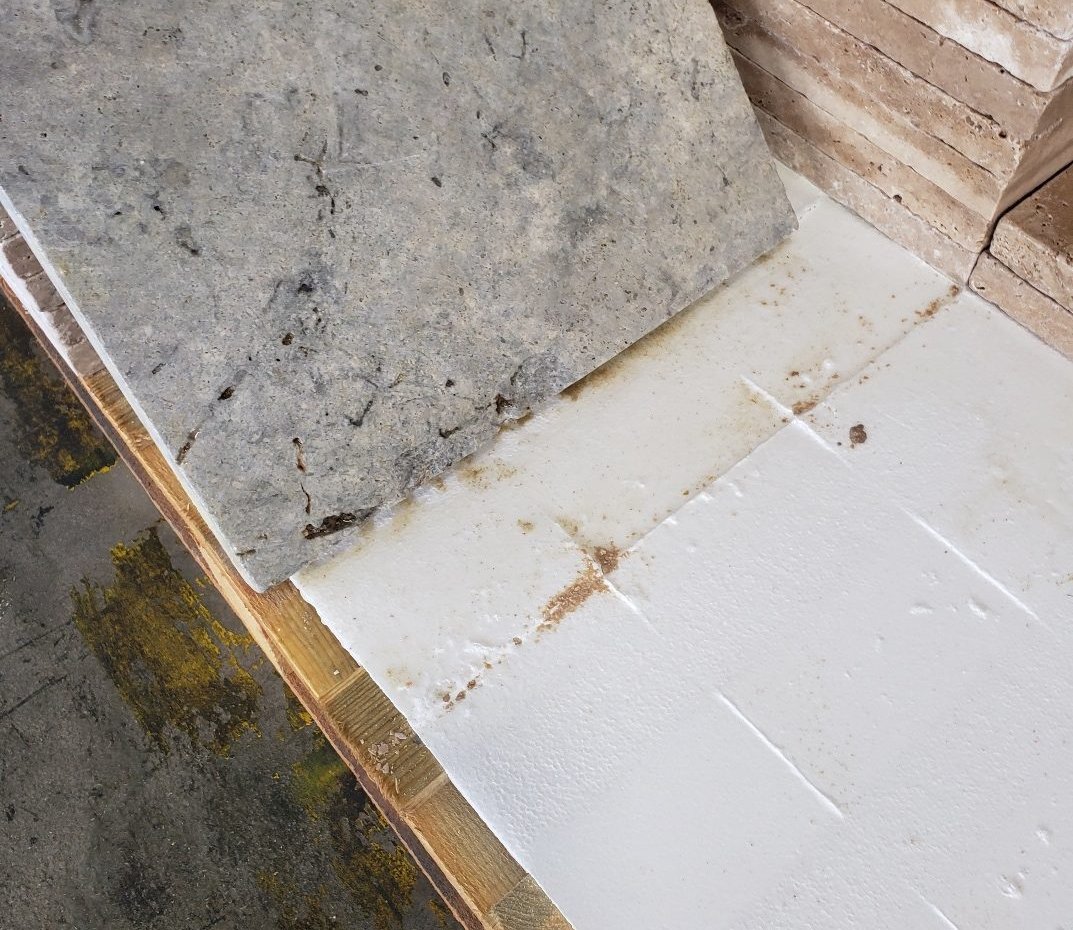
After — Stone Lifted
Stain cleared from the stone — iron visible on the white surface where the stone was set
The bleach test confirms two things at once. First, the staining is iron — not mold, not organic discoloration, not surface grime. Bleach dissolves the iron and pulls it out of the stone. You can see the rust transferred to the white base in the after photo.
Second, and this is the part that catches homeowners off guard: bleach only works once the stone is off the sand. Trying to clean a stain in place fails because the moment the stone goes back down on damp, iron-laden sand, the staining begins again. Capillary action keeps re-feeding iron up through the stone faster than any cleaner can remove it.
This is why surface cleaning is a temporary measure at best. The lasting fix is to remove the sand-to-stone contact — either by replacing the base or by switching to a concrete-based installation method.
Steps to a Stain-Free Installation
Start with the right foundation
1
Use a concrete-based installation method
Most Recommended
The most effective way to prevent iron staining is to eliminate direct sand-to-marble contact entirely. A concrete-based method creates a permanent barrier between the stone and any iron source below — solving the problem at the root rather than managing it over time.
Dry-Pack
White Portland + mineral-free silica sand. Sets rigid. No existing slab required. Familiar to sand-set installers.
Dribond
Polymer-modified bonding compound over existing concrete slab. Dry-lay process. Zero iron contact.
Thinset / Mortar
White polymer thinset over slab or full mortar bed. Most rigid option. Best long-term stability.
Specify ASTM C33 concrete sand or request a low-iron analysis from your supplier. Avoid red or tan masonry sands — their color is a warning sign of high iron content.
Material Selection
3
Install a geotextile isolation membrane
Lay a non-woven polypropylene geotextile between the compacted base and bedding sand. This creates a physical barrier that slows iron-laden fines from migrating upward into the marble.
Important Step
4
Engineer positive drainage (min. 2% slope)
Standing water is the catalyst. A minimum 1/4" per foot slope directs water away before it can saturate the sand bed and begin the staining cycle.
Drainage
5
Use white low-iron polymeric jointing sand
Standard polymeric sands can also contain iron. Choose a white or light-colored polymeric jointing sand specifically formulated for natural stone — these use polymer-coated silica with minimal iron content.
Joint Fill
6
Top-seal with a penetrating stone sealer
After installation and jointing, apply two coats of a pH-neutral penetrating impregnator. This slows surface absorption of water from rain or irrigation that could carry iron upward through the stone.
Sealing
7
Annual inspection and re-sealing schedule
Re-seal every 1-3 years depending on traffic and climate. Catching early staining — a faint yellow tint before it fully oxidizes — gives you the best chance of addressing it while it is still in early stages.
Maintenance
Method Comparison
Sand-set vs concrete-based installation
For stain prevention, not all installation methods are equal. This comparison covers the four main approaches for natural stone paver installation.
Factor
Sand-Set
Dry-Pack
Dribond
Thinset / Mortar Bed
Iron stain risk
High
None*
None
None
Existing slab needed
No
No
Yes
No / Yes
Installer difficulty
Easy
Easy–Moderate
Easy
Moderate
Adjustable after set
Yes
While fresh only
While fresh only
While wet only
Long-term stability
Moderate
Very good
Excellent
Excellent
SPI recommendation
Use with caution
✓ Good option
✓ Recommended
✓ Recommended
* Dry-pack requires mineral-free silica sand only. Standard construction sand contains iron and must not be used with marble.
The most reliable solution is to eliminate sand entirely
Sand-set installation is widely used and works well for many paver types. For natural stone — particularly marble — field conditions can affect how well each mitigation step performs. Back-sealing the underside of pavers before installation is a sound practice, but coverage on rough unfinished stone surfaces varies, and moisture can still find pathways through joints and edges over time.
Where long-term stain resistance is the priority, concrete-based installation methods offer a more reliable outcome by removing direct sand-to-marble contact entirely. Dry-pack with mineral-free sand, thinset over an existing slab, and full mortar bed are all proven approaches that eliminate iron migration at the source.
White Portland + mineral-free silica sand. Sets rigid — handles like sand-set but completely iron-free.
Thinset Over Slab
White polymer-modified thinset over existing concrete. Zero iron contact, zero flex, fastest method.
Full Mortar Bed
Portland cement mortar replaces sand entirely. Best for new installations without an existing slab.
If Staining Has Already Occurred
The honest picture on stain removal
Iron staining on marble is one of the most difficult problems to fully reverse. Once iron has oxidized and bonded within the stone's pores, surface treatments have significant limitations — especially across large installations.
The Hard Truth
Poultice treatments can help with small isolated stains — a spot here, a spot there. For widespread staining across a full pool deck, driveway, or patio, poultice is not a practical solution. Even when surface treatment provides temporary improvement, if the base is not corrected the staining returns.
In field experience, the only lasting solution for significant iron staining is to remove the pavers, correct the base — replacing sand with a concrete-based method — and reinstall. When pavers are removed from the iron source and properly reinstalled, the stone often comes out cleaner on its own once it is no longer in contact with the iron-bearing material.
This is why prevention is not just recommended — it is the only reliable answer. The cost of a concrete-based installation is far less than the cost of tearing up and reinstalling a stained job.
Treatment Options — Honest Assessment
Poultice — Small isolated stains only
Oxalic acid-based poultice can draw iron out of small affected areas. Labor intensive, inconsistent results, and impractical for large areas. Does not address the root cause.
Surface sealing — Not a fix
Sealing over stained marble does not remove or hide the stain. Sealing is a prevention tool only — it must be applied before staining occurs to be effective.
Base correction — The only lasting solution
Remove pavers, replace sand base with a concrete-based method, reinstall. When removed from the iron source, stone often improves significantly on its own. This is the standard SPI recommends for significant staining.
Need Help With a Stained Installation?
If you have an existing staining problem and need guidance on the right approach for your specific situation, contact us.
We've collected the questions we get most often into a dedicated FAQ page — capillary action, why cement works as a barrier, why sealers alone aren't enough, what to do if your stone is already stained, and more.
· Why does the stain only show on the top of the stone?
· Why does a cement base prevent the staining?
· Isn't the iron coming from the stone itself?
· If my stone is already stained, can it be saved?
The content on this page is provided for educational and informational purposes only. Stone Paver Institute cannot be held responsible for any installation outcomes or results arising from the use of this information. Always consult a licensed professional for advice specific to your project. See our full disclaimer.
Stay Updated
Get new guides in your inbox
New installation guides, stain prevention tips, and product knowledge — delivered when we publish. No spam, unsubscribe anytime.